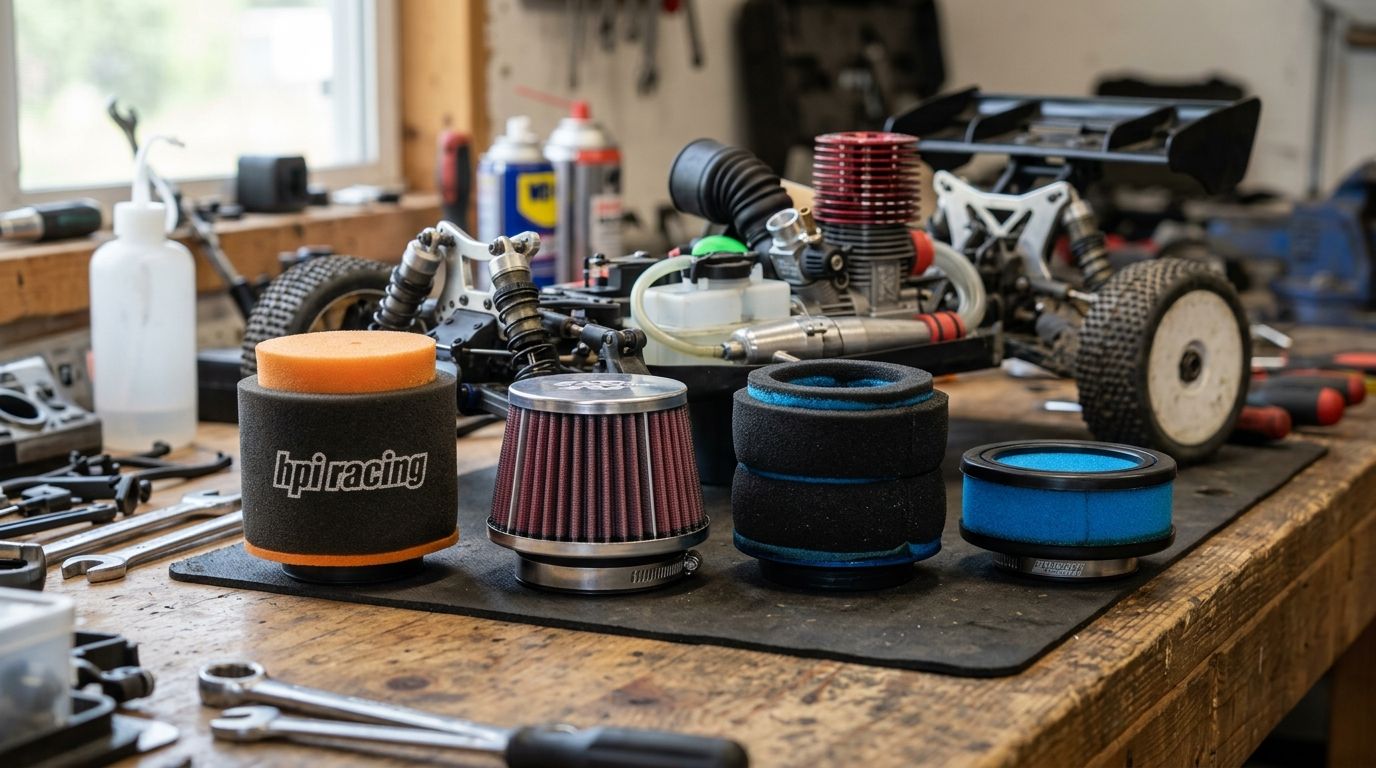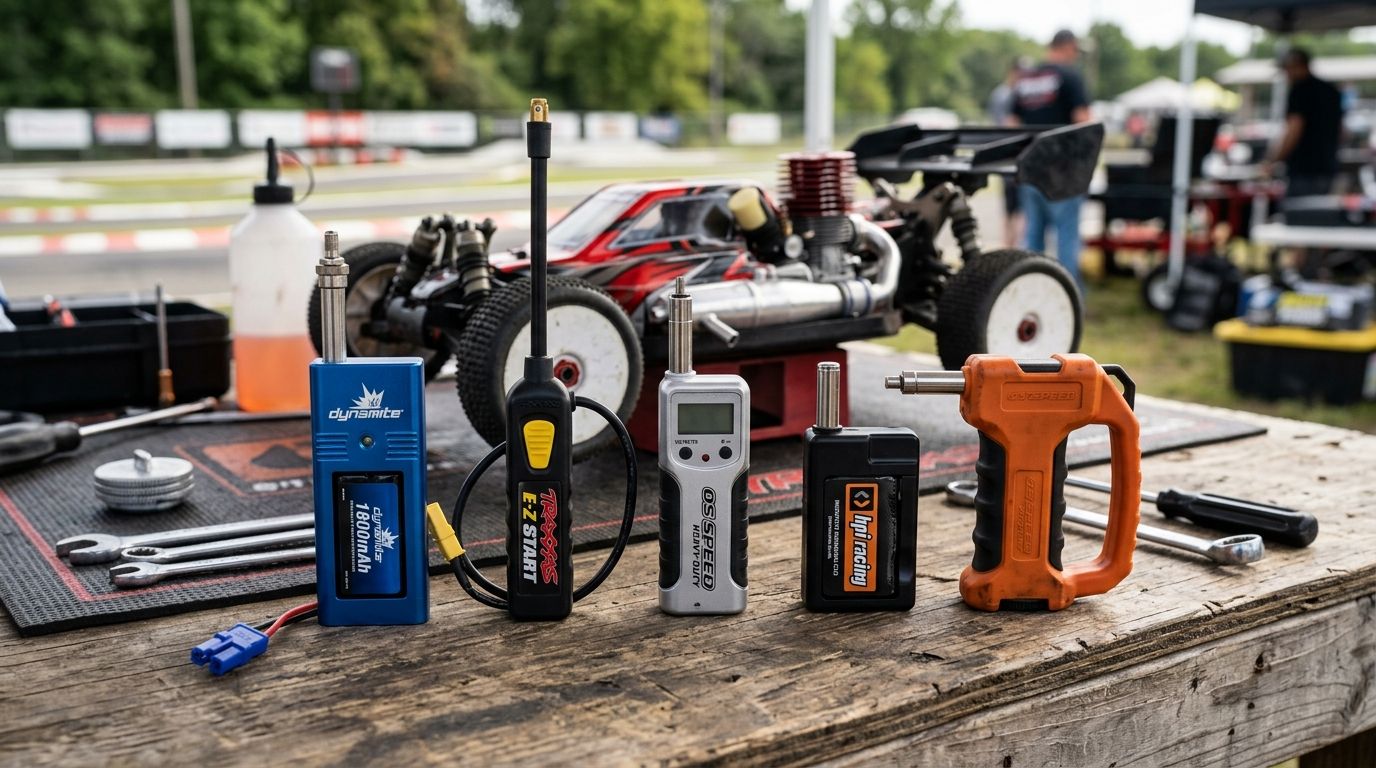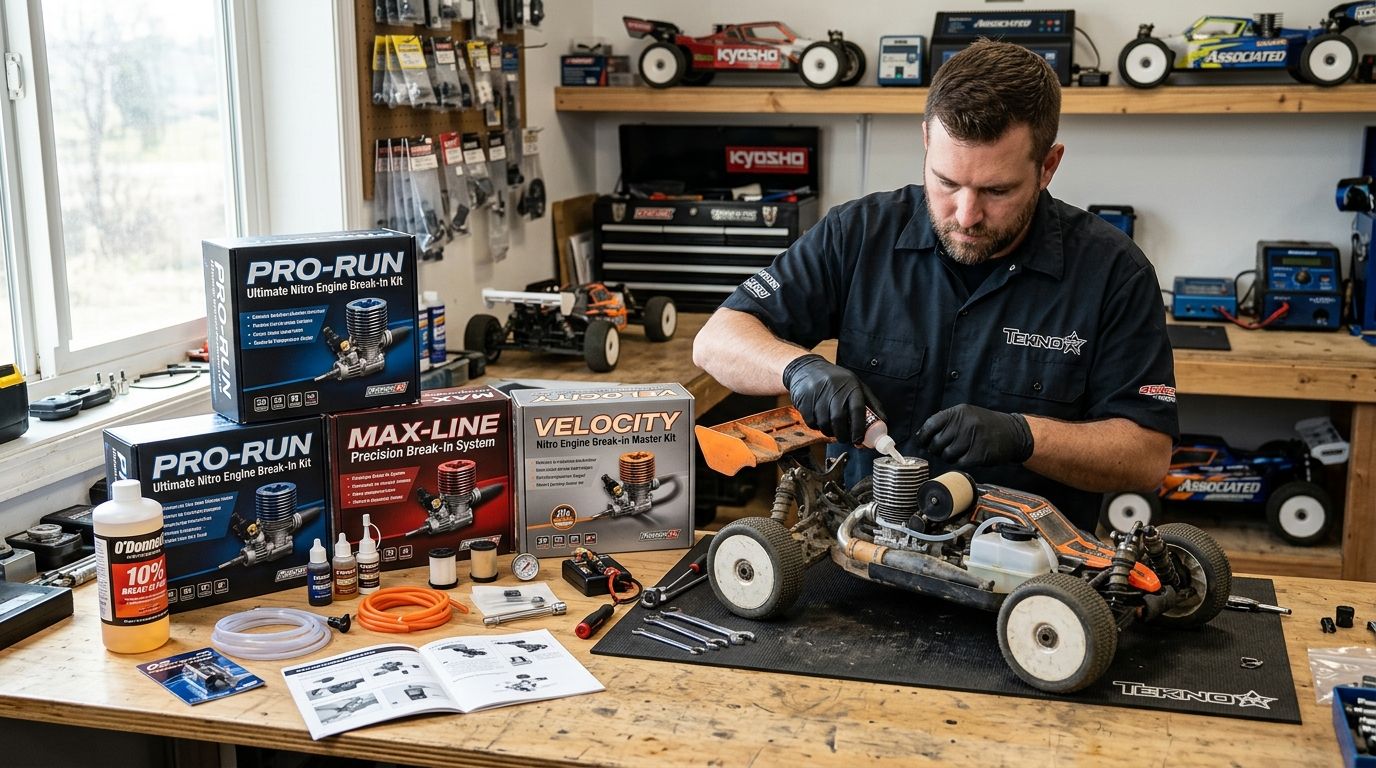
A nitro RC engine break-in kit is only as good as the data it gives you back — RPM readings, glow head temperature, and richness at the needle valve all tell you whether piston-to-sleeve mating is happening the way it should. This guide ranks the five break-in setups nitro RC racers actually use in 2026, from full dyno-based service down to the bare-minimum manual method.
- Powerband Precision's controlled dyno break-in service wins for racers who want logged, repeatable data on new engines.
- A bench-mounted break-in stand kit with a tachometer and glow igniter is the best nitro rc engine break-in kit for at-home beginners.
- Chassis-mounted break-in without a stand suits buggy and truck owners breaking engines in on dirt.
- Manual break-in with just a wheel stand and stopwatch is the budget option, but it leaves compression behavior unmeasured.
- On-road touring car engines need a bottle-fed richened bench kit for the tighter tolerances those motors run.
Why this matters
A rushed or under-documented break-in shortens engine life and shows up later as inconsistent powerband characteristics on the track. Piston-to-sleeve mating happens in the first 2-3 tanks of fuel, and how rich you run the needle valve during that window sets the compression behavior for the rest of the engine's life.
Skip the controlled load testing and you're guessing at whether the engine is actually seated correctly — and a botched break-in is one of the fastest ways to end up needing an engine rebuild well before you should. In 2026, with O.S. Engines and other nitro powerplants running tighter tolerances than a decade ago, the margin for error at break-in is smaller, not bigger.
What makes the best nitro RC engine break-in kit
- Load control — the ability to run the engine under resistance instead of free-revving, which is what actually mates the piston to the sleeve
- Temperature monitoring — glow head and cylinder head readings that flag detonation risk before it does damage
- RPM measurement accuracy — a tachometer with enough resolution to catch a lean run-up in real time
- Fuel metering control — a needle valve setup fine enough to hold a rich break-in mixture without flooding
- Data logging — a record of each break-in session so compression behavior can be compared tank to tank
- Repeatability — the setup produces the same result on the fifth engine as it did on the first
Break-in kits and methods at a glance
| Setup | Best for | Standout feature | Key limitation |
|---|---|---|---|
| Powerband Precision dyno break-in service | Racers wanting documented data | Full controlled load testing with logged output | Requires shipping or dropping off the engine |
| Bench-mounted break-in stand kit | At-home beginners | Stable platform, tach and glow igniter included | No load control — engine runs free |
| Chassis-mounted break-in setup | Buggy and truck owners | Break-in happens on the actual drivetrain | Hard to hold a consistent RPM by hand |
| Bottle-fed richened bench kit | On-road touring car engines | Fine needle valve control for tight tolerances | Slower process, more attention needed per tank |
| Manual break-in (wheel stand + stopwatch) | Budget / minimal-tool break-in | Lowest cost of entry | No temperature or compression data captured |
1. Powerband Precision controlled dyno break-in service: best for documented break-in data
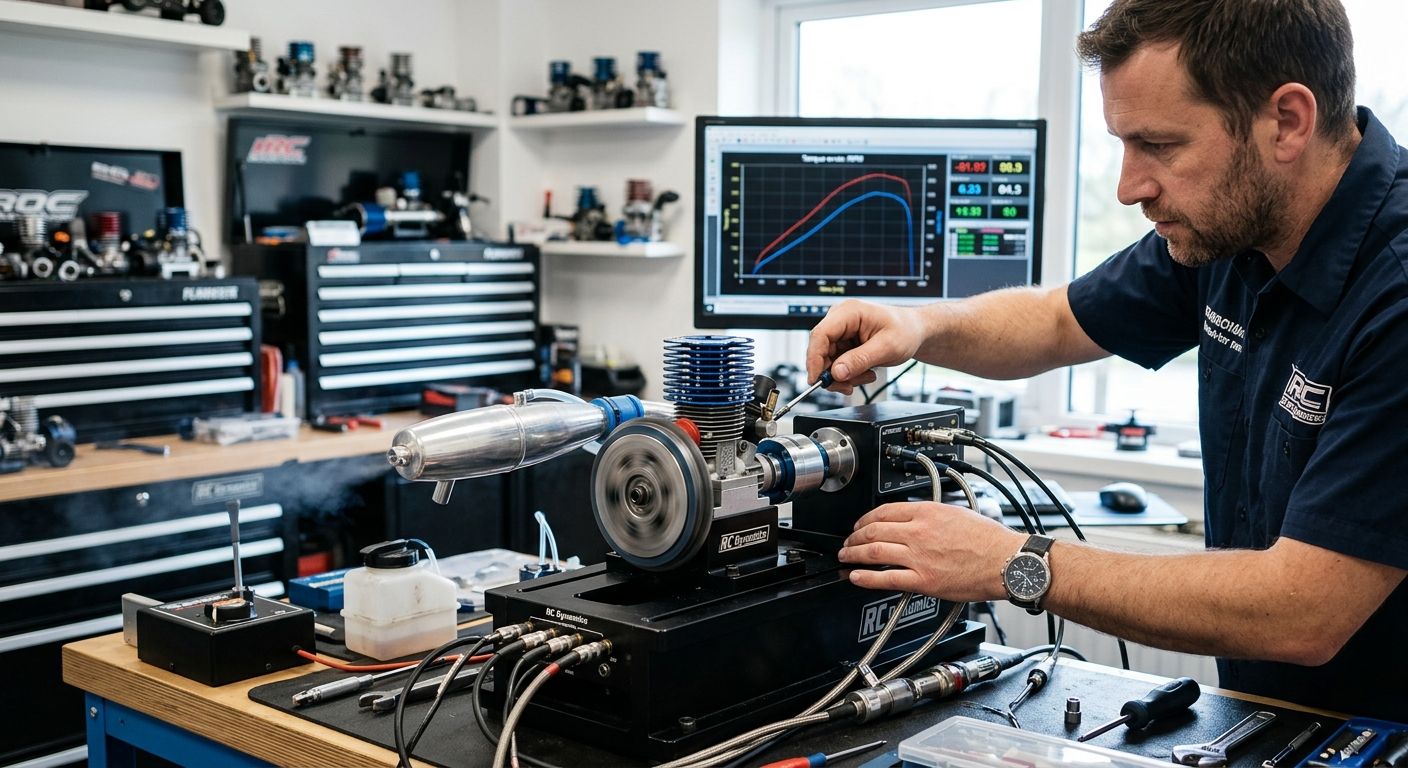
This is a bench dyno process that runs a new engine under a controlled load while logging RPM, temperature, and compression behavior across every tank of the break-in cycle. Instead of guessing at whether the piston-to-sleeve fit has seated correctly, the engine comes back with a printed or digital record showing exactly how the powerband characteristics changed run to run. It's built for racers who are putting a fresh O.S. Engines motor into competition and can't afford to find out mid-season that the break-in was off.
Powerband Precision dyno break-in service pros:
- Controlled load testing catches lean run-ups before they cause detonation
- Logged data lets you compare this engine's break-in against past builds
- Removes guesswork from piston-to-sleeve mating
Powerband Precision dyno break-in service cons:
- You're not doing the break-in yourself, which some hobbyists want to learn
- Turnaround depends on shipping or drop-off logistics to Sanger, California
Best for: racers running new or rebuilt engines who want measured results, not a guess. Verdict: Buy.
Get your engine dyno break-in scheduled
Controlled load testing and logged break-in data before race day.
2. Bench-mounted break-in stand kit: best for at-home beginners
A basic break-in stand holds the chassis or a bare engine stationary while you feed fuel through a starter box, watch a tachometer, and use a glow igniter to keep the plug lit during low-speed runs. This is the setup most hobbyists reach for first because it's simple to operate at a workbench and doesn't require any tuning experience beyond reading a needle valve.
Bench-mounted break-in stand kit pros:
- Stable and repeatable — the engine doesn't move around during the run
- Works with almost any nitro engine size
- Straightforward for someone doing their first break-in
Bench-mounted break-in stand kit cons:
- No load resistance, so the engine free-revs instead of working against drivetrain load
- Doesn't capture temperature or compression data
- Easy to run too lean without a clear reference point
Best for: beginners breaking in their first beginner nitro RC engine at home. Verdict: Buy.
3. Chassis-mounted break-in setup: best for buggy and truck owners
This method skips the bench stand entirely and breaks the engine in while it's already mounted in the buggy or truck chassis, using a remote glow igniter and a handheld digital tachometer to monitor RPM. It puts the actual drivetrain load on the engine from the first tank, which more closely matches real running conditions than a free-spinning bench setup.
Chassis-mounted break-in setup pros:
- Engine breaks in against real drivetrain resistance, not free air
- No separate stand to buy or store
- Works for both off-road buggy and monster truck platforms
Chassis-mounted break-in setup cons:
- Harder to hold a consistent RPM by hand across multiple tanks
- Dirt and debris exposure during early break-in runs
- No data logging unless you're recording readings manually
Best for: owners breaking in engines destined for off-road buggies or trucks who want the drivetrain load involved from tank one. Verdict: Buy.
4. Bottle-fed richened bench kit: best for on-road touring car engines
On-road touring car engines typically run tighter compression tolerances than off-road motors, so this setup pairs a bottle feed with fine needle valve adjustment to hold a deliberately rich mixture longer into the break-in cycle. A digital tachometer tracks RPM stability tank to tank, which matters more on touring cars because their powerband characteristics are narrower to begin with.
Bottle-fed richened bench kit pros:
- Fine needle valve control suits the tighter tolerances of touring car engines
- Bottle feed keeps fuel delivery consistent across the session
- Easier to hold a deliberately rich setting than with a standard tank
Bottle-fed richened bench kit cons:
- Slower process than a standard bench break-in
- Requires more attention per tank to avoid flooding
- Not necessary for off-road engines with wider tolerances
Best for: on-road touring car engines where compression behavior needs tighter control. Verdict: Buy.
5. Manual break-in (wheel stand + stopwatch): best budget option
This is the no-frills version: a simple wheel stand or holding the chassis by hand, a stopwatch to pace run times, and no tachometer or glow igniter beyond what's already in the pit box. It costs almost nothing beyond fuel, which is why it's still common among hobbyists running lower-cost engines.
Manual break-in pros:
- Lowest cost of entry — no dedicated tools needed
- Works anywhere, no bench setup required
Manual break-in cons:
- No RPM readout, so lean runs are easy to miss
- No temperature or compression data captured at all
- Inconsistent between sessions since pacing is done by feel
Best for: hobbyists on a tight budget running low-cost engines where a full break-in record isn't a priority. Verdict: Hold — fine for casual use, not for a competition engine.
How we ranked these
Each setup was scored against the six criteria above — load control, temperature monitoring, RPM accuracy, fuel metering, data logging, and repeatability. The dyno-based service scores highest because it's the only method that logs every criterion; the manual method scores lowest because it captures none of them beyond a stopwatch reading.
Which nitro RC engine break-in kit should you choose?
If the engine is going into a race in 2026, the Powerband Precision controlled dyno break-in service is the safe default — it's the only option here that gives you a logged record of compression behavior instead of an assumption. If you're breaking in a first engine at home for casual running, the bench-mounted break-in stand kit covers the basics without asking you to learn tuning theory first. Touring car racers should lean toward the bottle-fed richened bench kit given how narrow those engines' tolerances run.
FAQ
What is the best nitro RC engine break-in kit for beginners in 2026?
A bench-mounted break-in stand kit with a tachometer and glow igniter is the best starting point for beginners in 2026. It's stable, simple to operate, and doesn't require any prior tuning experience.
Is a dyno break-in service better than a DIY break-in kit?
A dyno break-in service gives you logged RPM, temperature, and compression data that a DIY kit can't capture. DIY kits work fine for casual engines, but a dyno service is the safer choice for a competition build.
How many tanks of fuel does a nitro engine break-in take?
Most nitro RC engines need roughly 2-3 tanks of rich-mixture running before compression behavior stabilizes. The exact number varies by engine size and how it's loaded during break-in.
Do I need a tachometer for break-in?
Yes — without a tachometer you can't tell if the engine is running too lean during break-in, which is one of the fastest ways to cause detonation. A digital tach is the minimum tool beyond fuel and a starter box.
Can I break in a nitro engine without a stand?
Yes, chassis-mounted break-in works without a bench stand and lets the engine break in against real drivetrain load. It's harder to hold a consistent RPM by hand, so a tachometer still matters.
What's the difference between break-in for off-road and on-road nitro engines?
On-road touring car engines run tighter compression tolerances and need finer needle valve control during break-in than most off-road engines. Off-road engines tolerate a wider break-in window before performance suffers.
How much does a professional break-in service cost?
Pricing varies by engine size and service scope, so check current listings directly with the provider rather than relying on a fixed figure.
One last thing
The detail most hobbyists miss: a rich break-in that looks "too rich" on a bench stand is often exactly right, because free-revving without load reads leaner than the same needle setting under real drivetrain resistance. That's the gap chassis-mounted and dyno-based break-in close that a bare bench stand can't.